

Why projects go wrong
Most software fails long before anyone writes code.
It fails in the gap between what a business needs and what gets specified. Here is what that gap usually looks like, and what we do about it.
What usually happens
What we do instead
The brief describes a solution, not a problem.
By the time a spec reaches a developer it already names screens, features and a technology. Nobody has written down what would have to become true for the project to have been worth doing.
We start from the outcome you are buying.
One sentence, agreed in writing, describing what changes in the business if this works. Every later decision gets checked against it. Anything that cannot be traced back to it does not get built.
Estimates are quoted with false confidence.
A number is given early, before anyone understands the awkward parts. It is defended for months, then missed, and the conversation turns into a negotiation about blame rather than about the work.
We separate what we know from what we are guessing.
Estimates arrive with the assumptions they rest on, named. When an assumption turns out to be wrong you hear it that week, with the revised position and the options, not at the deadline.
Nobody owns the seams.
Each part works when tested alone. The failures live where the payment provider meets the invoicing, where the form meets the inbox, where the automation meets the person who has to approve it.
We test the joins first.
The riskiest connection gets built and proven before the comfortable parts. If an integration is going to be a problem, it is a problem in week one, while there is still budget and time to route around it.
Automation is bolted on and quietly drops things.
A workflow is set up, works for a fortnight, then fails on an edge case at 2am. It keeps failing. Nobody notices, because nothing was watching, and the first sign is a customer asking where their order went.
Every automation we ship has a failure path.
Explicit error handling, duplicate deliveries dropped, and an alert to somewhere a person actually looks. Silence means it worked, because we made silence mean something.
The handover is a repository and good luck.
The team that built it leaves with the context in their heads. Six months later a small change costs a discovery project, because nobody can safely predict what it will break.
We hand over the reasoning, not just the code.
Written decisions, the alternatives that were rejected and why, and the parts we would do differently. You should be able to hire anyone to work on it next, including not us.
About us
A small practice, deliberately.
Trinovata is a digital consultancy. We do two things that are usually sold separately: work out what a business actually needs, and then build it.
Keeping both under one roof is the point. Strategy that never meets an implementation stays theoretical, and engineering without a clear commercial outcome produces software that works perfectly and changes nothing. Most of the expensive failures we are asked to look at sit exactly in that handover.
We stay small on purpose. A small team cannot take on work it does not believe in, cannot hide a weak decision behind a process, and cannot hand your project to whoever happened to be free. It also means we say no more often than most consultancies, which is often the most useful thing we do for someone who asks.
We work with founders, owner-managed businesses, and teams inside larger organisations who need something built properly and want to understand it afterwards.
Strategy
Deciding what is worth building.
Commercial framing, scope, and the discipline to cut. Includes establishing whether a project should happen at all.
Engineering
Building it so it holds up.
Web and application development, integrations, data. Written to be maintained by somebody who was not there when it was built.
Automation and AI
Removing the work nobody should be doing.
Workflows, agents and assistants with approval gates and explicit failure paths, so a person stays in the loop wherever judgement is needed.
Design
Making it legible.
Interface and identity work held to a written standard, so what ships looks considered rather than assembled.
Advisory
Being the technical person in the room.
Fractional CTO work and technical due diligence, for teams making a decision they cannot easily reverse.
These are the capabilities the practice covers, not a headcount. We name who will actually do your work when we quote it, because that is the point at which it matters.
02 — What We Do
Capabilities
Depth over breadth. Mastery over generality.
01
Digital Business Strategy
Market positioning, digital transformation architecture, competitive intelligence, and growth frameworks — designed for execution, not presentation.
02
Software Engineering
Bespoke platforms, applications, and integrations. Built with modern architectures, deployed to scale, maintained to last. No templates. No shortcuts.
03
AI & Intelligent Automation
Intelligent systems woven into your operations — not bolted on. We identify where AI creates genuine leverage, then engineer it into your workflow.
04
Technical Due Diligence
For acquisitions, investments, or internal assessment — a clear-eyed evaluation of technical assets, debt, team capability, and scalability.
05
Fractional CTO Advisory
Executive-level technology leadership without the full-time overhead. Board-ready insight. Engineering-grade decisions.
06
Product Design & UX
Interfaces that respect your users' intelligence. Information architecture, interaction design, and visual systems built for clarity — not decoration.
03 — How We Build
From Conversation to Completion
Every project follows this rhythm. Watch how your vision becomes reality.
09:41
OPERATIONSGood morning.
Revenue$2.4MGrowth+28%
04 — Built For The Work
Clarity, carried into every screen.
Strategy becomes tangible in systems that are calm under pressure, useful on day one, and designed to grow with the business.
05 — How We Work
Our Project Process
I
01. Exploration
Before a single line of strategy or code, we listen. We map your business landscape, competitive position, and operational reality. Assumptions are the enemy of good architecture.
Stakeholder Alignment
Landscape Audit
Opportunity-Cost Analysis
II
02. Strategy
Strategy and systems designed in concert. Every recommendation is buildable. Every build is strategically justified. No handoffs between departments — because we don't have departments.
Solution Blueprint
Technology Selection
Roadmap & Milestones
III
03. Implementation
Execution with the rigour of engineering and the sensibility of design. We ship working systems — then stay to ensure they perform. The engagement doesn't end at deployment.
Iterative Development
Performance Benchmarking
Ongoing Advisory
06 — Where We Work
Industries
Domain expertise that compounds with every engagement.
Financial Services
Regulatory-compliant platforms, fintech infrastructure, wealth management systems.
Swipe right to see more OpenHealthcare & Biotech
HIPAA-ready applications, clinical data pipelines, patient experience platforms.
Swipe right to see more OpenEnterprise SaaS
Scalable multi-tenant architectures, pricing infrastructure, integration ecosystems.
Swipe right to see more OpenEducation & EdTech
Learning platforms, assessment engines, institutional digital transformation.
Swipe right to see more OpenE-Commerce & DTC
Headless commerce, conversion optimization, supply chain integration.
Swipe right to see more OpenCybersecurity
Security architecture, compliance automation, zero-trust infrastructure.
Swipe right to see more Open
Live Pipeline
Deploying
Requirements
Scope defined
Build
Compiling assets
Test
42 checks passed
Stage
Preview ready
Deploy
Going live
Monitor
Performance live
07 — Selected Work
Shipped
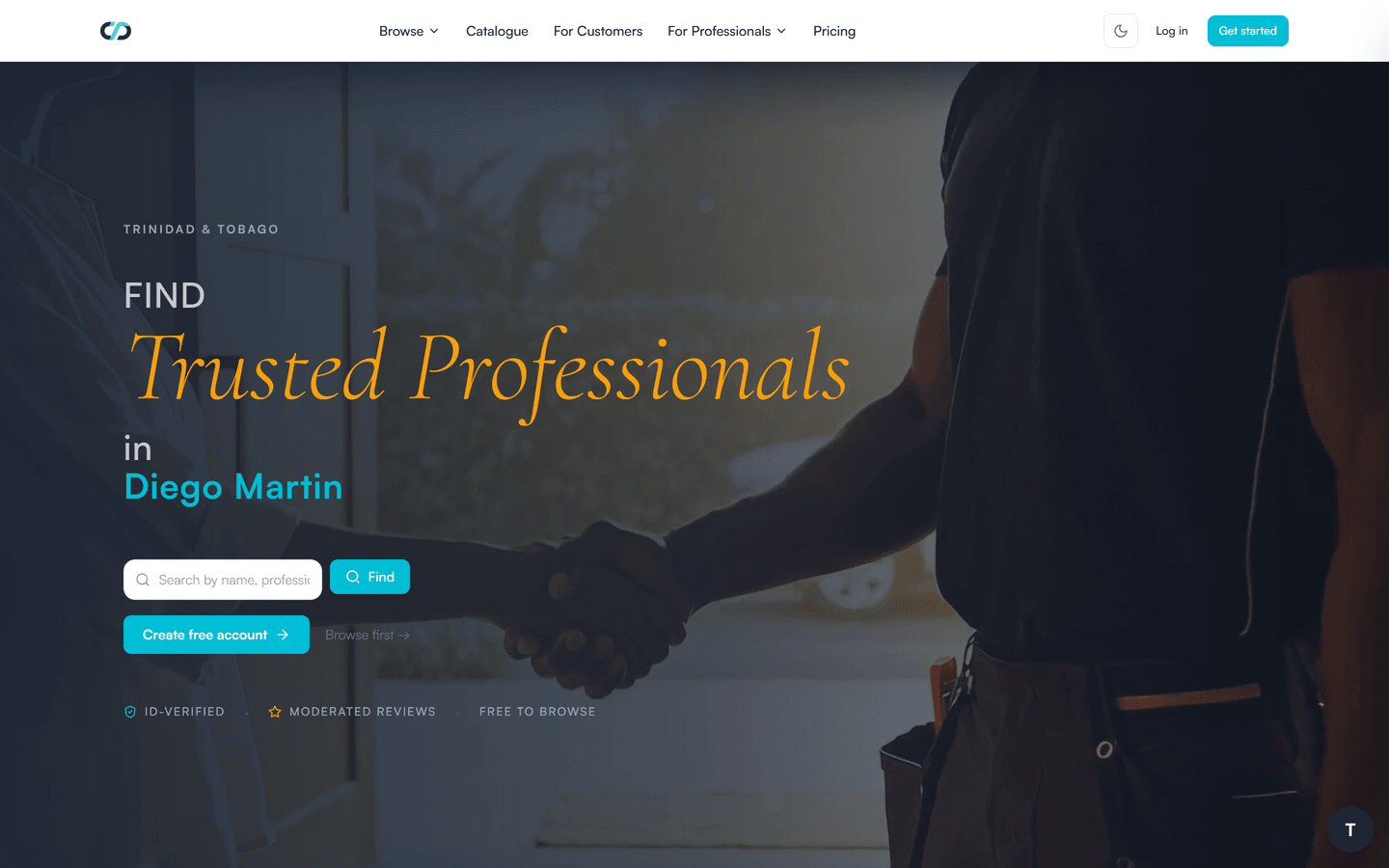
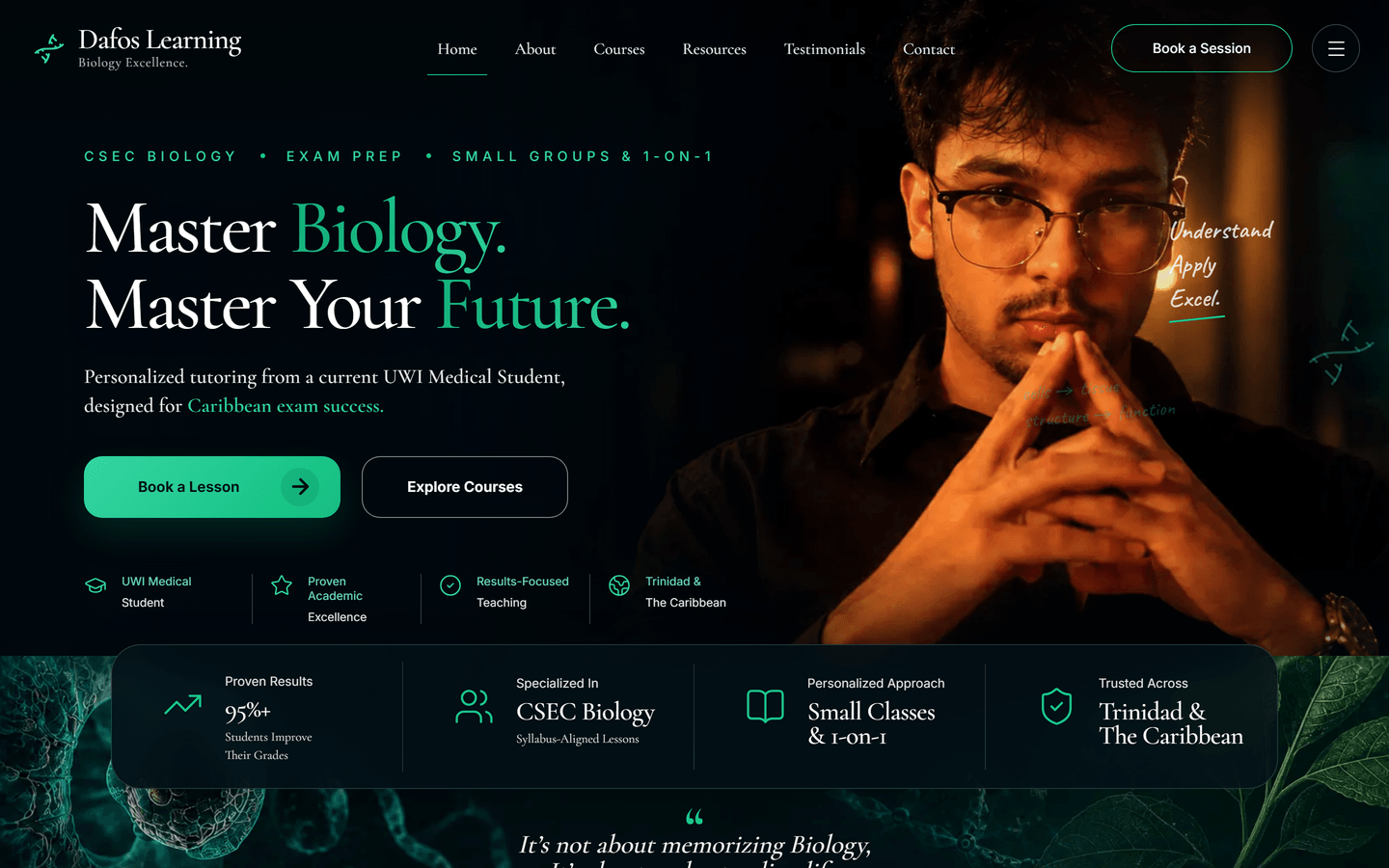
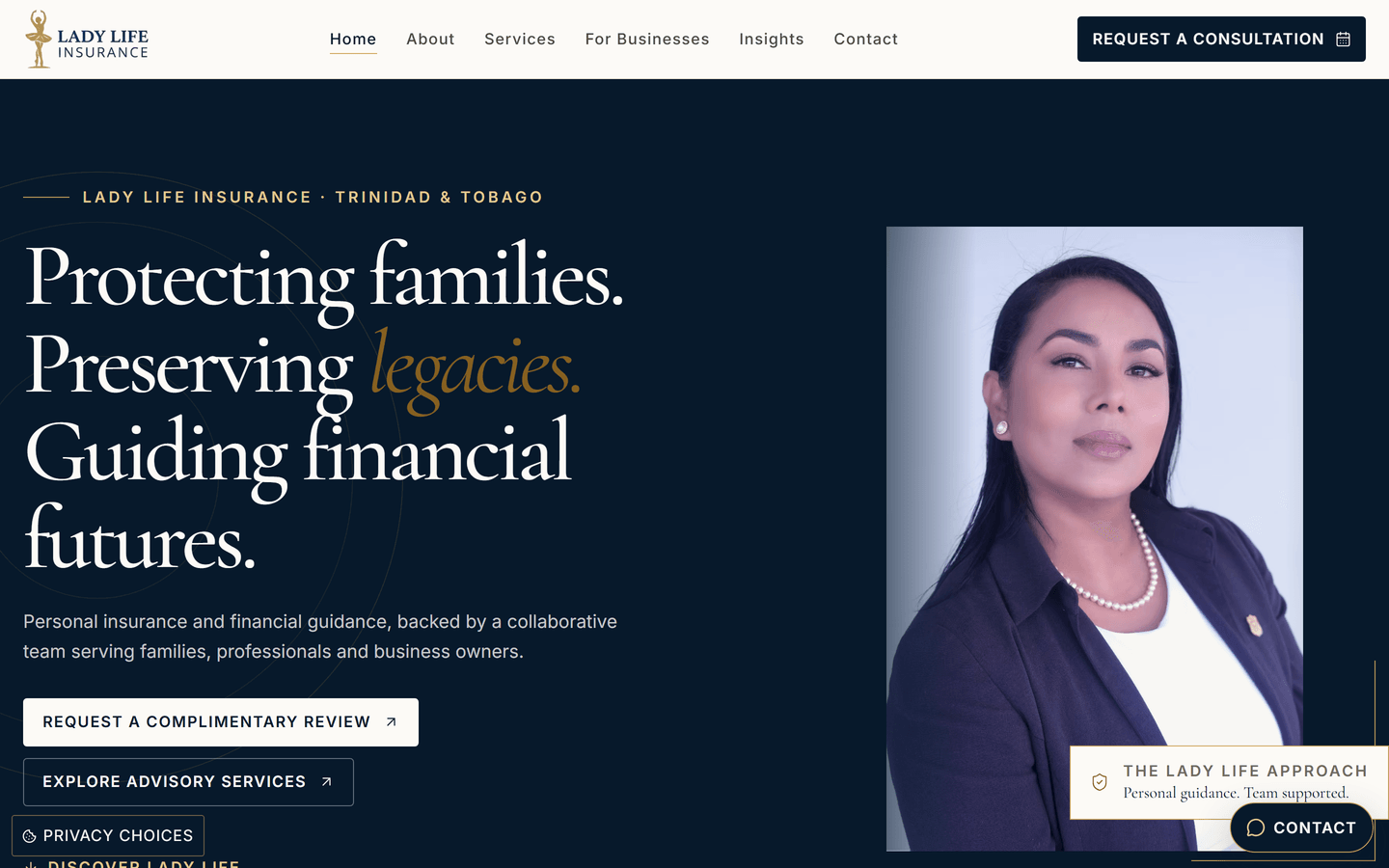
Live sites, built and shipped. Each one is running in production right now — click through and judge the real thing.
08 — The Range We Ship
The Range We Ship
Representative builds across the engagement types we take on — each a placeholder for the pattern, not a portfolio piece. Your product replaces one of these.
09 — What We Believe
Principles
I
Needs over wants
We'll tell you what you need to hear. The best investment is often the one you don't make.
II
Substance over signal
No buzzwords. No vanity metrics. Success measured by outcomes that matter.
III
Longevity over novelty
Technologies chosen for five-year value, not today's hype cycle.
IV
Partnership over transaction
We don't take projects. We take on problems. Our best relationships are measured in years.
Start Here
Ready to define
your vision?
Our interactive brief captures everything we need to design your first mockup. Takes 5-10 minutes. You'll receive a copy of your responses.
Design Your Vision
10 — Let's Talk
Start a conversation.
We're selective about the work we take on — not out of exclusivity, but because depth requires focus.